Prebiotics, unlike their counterpart probiotics, do not receive much attention or are least likely to be known by a majority of people. Both are important for your gut health (which is a quite prominent topic in nutrition and wellness) and they also work together.
Prebiotics are defined as non-digestible food ingredients that stimulate the growth and/or activity of one or more bacteria (gut microbiome) in the colon (Davani-Davari et al., 2019). By nourishing these microbes, prebiotics help maintain a healthy gut microbiome and support digestive health.
JOIN OUR WHATSAPP GROUP FOR UPDATES
How prebiotics work
When prebiotics reach the colon, beneficial bacteria ferment them and produce compounds known as short-chain fatty acids (SCFAs) such as acetate, propionate, and butyrate (Ali et al., 2025). According to Davani-Davari et al., 2019,
- They provide energy for the gut microbes
- They alter the pH of the gut environment by making it more acidic through fermentation contributing to a change in the composition and population of the gut microbiota and deterring harmful pathogens.
- Selective fermentation of galacto- oligosaccharides promotes neurochemical signaling via the gut–brain axis (Johnstone and Kadosh, 2025)
Types of Prebiotics
According to Davani-Davari et al., 2019, prebiotics come in form of:
- Fructans– include inulin and they occur naturally in plants such as chicory root, Jerusalem artichoke, and garlic (Ali et al., 2025).
- Galacto-Oligosaccharides– found in legumes and dairy products.
- Resistant starch– found in foods like green bananas, cooked and cooled potatoes, and whole grains, they act as fermentable fibers, producing SCFAs that promote colon health (Cereda and Andrade, 2023).
- Non-Carbohydrate Oligosaccharides– found in cocoa.
What to include in your diet for optimum prebiotic intake
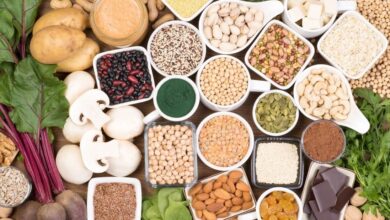
Prebiotic rich foods are rich in fiber and the best approach is to consume a variety of plant-based foods rather than relying on a single source depending on which particular ones are easily available where you are or during what season.
1.Vegetables
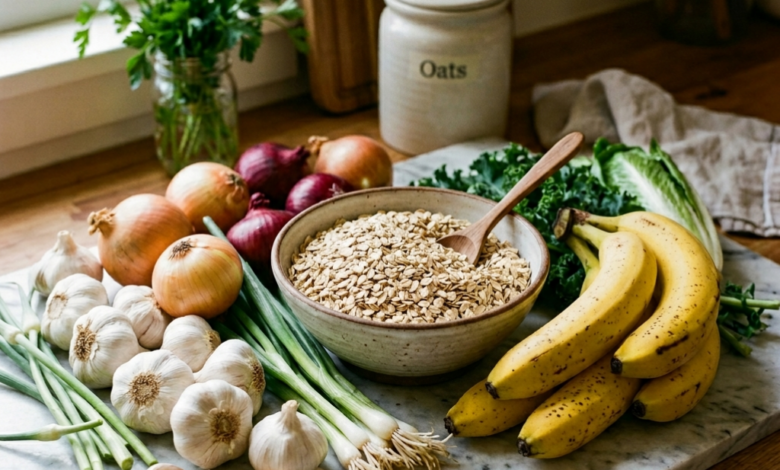
These may include garlic, onions, leeks, asparagus and Jerusalem artichokes.
2. Fruits
You may include bananas (especially green ones), pears and apples.
3. Legumes
Lentils, chickpeas, kidney beans and black beans are also rich in prebiotics.
4. Whole grains
Include foods like oats, barley and whole wheat.
5. Other Sources
You may incorporate cooked and cooled rice, flaxseeds, cocoa and cooked and cooled potatoes.
ALSO READ
- 9 Nutrient Deficiency Signs Your Body May Show and What to Eat to Correct Them.
- 10 Best Iron-Rich Foods for Vegetarians and Vegans
Health Benefits of Prebiotics
- Enhance the absorption of calcium particularly lactulose and inulin (Ali et al., 2025).
- Promote skin health by selectively stimulating the growth of beneficial skin microbiota and reinforcing the integrity of the skin barrier (Shirkhan et al., 2024) which helps in the retention of moisture as well as collagen production (Davani-Davari et al., 2019).
- Protection against the risk of colorectal cancer through certain fermentation products such as butyrate (Davani-Davari et al., 2019)
- Prebiotics improve insulin sensitivity, reduce systemic inflammation, and support healthy weight management (Singh et al., 2024) reducing the risk of diseases/ conditions such as obesity, diabetes and hypertension.
- Improvement of bone health by enhancing the absorption of calcium and magnesium which are needed for maintaining bone density and structural integrity. Prebiotics may contribute to the prevention of osteoporosis and other bone-related disorders, particularly among aging populations (Behera et al., 2020).
- They have some therapeutic effects on autism (Davani-Davari et al., 2019)
- They also support the cognitive function of the body (Davani-Davari et al., 2019)
- Promotion of the development of the nervous system in infants while reducing the onset and progression of dementia in the elderly. (Davani-Davari et al., 2019)
- Reduction of mood disorders such as depression and anxiety by influencing the balance of gut microbes (Ali et al., 2025)
- Improves immune health (Davani-Davari et al., 2019)
- Reduce the incidences of Irritable Bowel Syndrome and Crohn’s disease (Davani-Davari et al., 2019)
- Helps prevent allergies and reduce hypersensitivity by shifting the immune balance and modulating immune pathways (Ali et al., 2025)
JOIN OUR WHATSAPP GROUP FOR UPDATES
In conclusion, prebiotics are a foundational component of gut health. By feeding beneficial bacteria, they help support digestion, immune function, nutrient absorption, metabolic health, and overall well-being.
Fortunately, improving your prebiotic intake does not require expensive supplements or complicated diets. Everyday foods such as garlic, onions, bananas, oats, beans, lentils, and asparagus provide natural sources of these beneficial compounds. For beginners, focusing on a diverse, plant-rich diet is one of the simplest and most effective ways to support a healthy gut microbiome and promote long-term health.
Sources
- Davani-Davari D, Negahdaripour M, Karimzadeh I, Seifan M, Mohkam M, Masoumi SJ, Berenjian A, Ghasemi Y. Prebiotics: Definition, Types, Sources, Mechanisms, and Clinical Applications. Foods. 2019 Mar 9;8(3):92. doi: 10.3390/foods8030092. PMID: 30857316; PMCID: PMC6463098.
- Sajid Ali, Muhammad Hamayun, Muhammad Siraj, Sumera Afzal Khan, Ho-Youn Kim, Bokyung Lee, Recent advances in prebiotics: Classification, mechanisms, and health applications, Future Foods, Volume 12, 2025, 100680, ISSN 2666-8335, https://doi.org/10.1016/j.fufo.2025.100680.
- Johnstone, N., Kadosh, K.C., 2025. A randomised controlled trial of the effects of Galacto-Oligosaccharides on the gut brain-axis of young females. medRxiv. 2025.2001. 2009.25320270.
- Jyotirmaya Behera, Jessica Ison, Suresh C. Tyagi, Neetu Tyagi, The role of gut microbiota in bone homeostasis, Bone, Volume 135, 2020, 115317, ISSN 8756-3282, https://doi.org/10.1016/j.bone.2020.115317.
- Singh, G., Kaur, S.D., Sahoo, S., Narang, R.K., Mishra, N. and Singh, A., 2024. Role of Synbiotics in Metabolic Disorders. In Synbiotics in Human Health: Biology to Drug Delivery (pp. 195-211). Singapore: Springer Nature Singapore.
- Cereda, M.P. and Andrade, L.A., 2023. Food uses and nutritional applications of resistant starches. In Starchy Crops Morphology, Extraction, Properties and Applications (pp. 371-404). Academic Press.
- Shirkhan, F., Safaei, F., Mirdamadi, S. and Zandi, M., 2024. The role of probiotics in skin care: advances, challenges, and future needs. Probiotics and Antimicrobial Proteins, 16(6), pp.2132-2149.
Written by:
Laura Mlambo
Medically Reviewed by:
Annie C. Msauki MSc -Biostatistics & Epidemiology, BSc Nutritional Sciences | Public Health Nutritionist | Certified Lactation Specialist |
Annie is a Registered Nutritionist with over 15 years of experience in public health nutrition, clinical nutrition, and maternal-child health. She currently works with the Ministry of Health and Child Care [MOHCC] in Zimbabwe and is the Founder of Kefas Nutrition Services, where she leads programs focused on nutrition care, wellness days, and community health.
Last Updated:
2 June 2026